
Swiss authorities are asking travellers returning from infested regions to inspect their cars and luggage for Japanese beetles, as part of a new campaign to slow the spread of the invasive pest.

The Japanese beetle, roughly the size of a coffee bean, poses a serious threat to agriculture, horticulture and the environment. This insect is extremely voracious, said Christian Hofer, director of the Federal Office for Agriculture (FOAG), at a press conference on Monday.
Adult beetles feed on the leaves, fruit and flowers of more than 400 plant species. Their larvae attack the roots of lawns and green spaces. Annual damage is estimated at several hundred million Swiss francs.
The beetle was first detected in Switzerland in 2017 in the canton of Ticino. Since then it has spread rapidly south of the Alps. Last year it caused significant economic damage for the first time. Isolated populations have also appeared north of the Alps, mainly along major transport routes.
The authorities’ aim is now to slow the insect’s spread, buying time to improve control measures and gather more experience in combating the pest.
According to the federal agriculture office, people play a major role in spreading the beetle. The insects often travel unnoticed as stowaways in vehicles or luggage.
A new campaign, branded “Stop the Japanese beetle—check your luggage”, urges anyone leaving infested areas to inspect their belongings carefully before returning home.
Travellers urged to check luggage and cars after visiting infested regions. Anyone returning from the following areas is advised to inspect their luggage and vehicle before travelling onward—and to familiarise themselves with the appearance of the Japanese beetle. This applies in particular to travellers returning from northern Italy, including Milan, Varese, Novara, Biella, Vercelli, Asti, Alessandria, Pavia and Lodi, as well as from the canton of Ticino, Graubünden—particularly the Misox valley—and Valais, especially the Simplon region.
Travellers are advised to check clothes worn outdoors, including jackets and shoes, as well as backpacks and handbags. Sports and outdoor equipment require particular attention. Suitcases and travel bags should be inspected inside and out.
Authorities are also urging motorists to search vehicle interiors thoroughly, including boots, seats and footwells.
How to identify the Japanese beetle
Adult Japanese beetles are about the size of a coffee bean, measuring roughly 1-1.2cm in length. They have a shiny metallic-green head and upper body, with copper-brown wing covers.
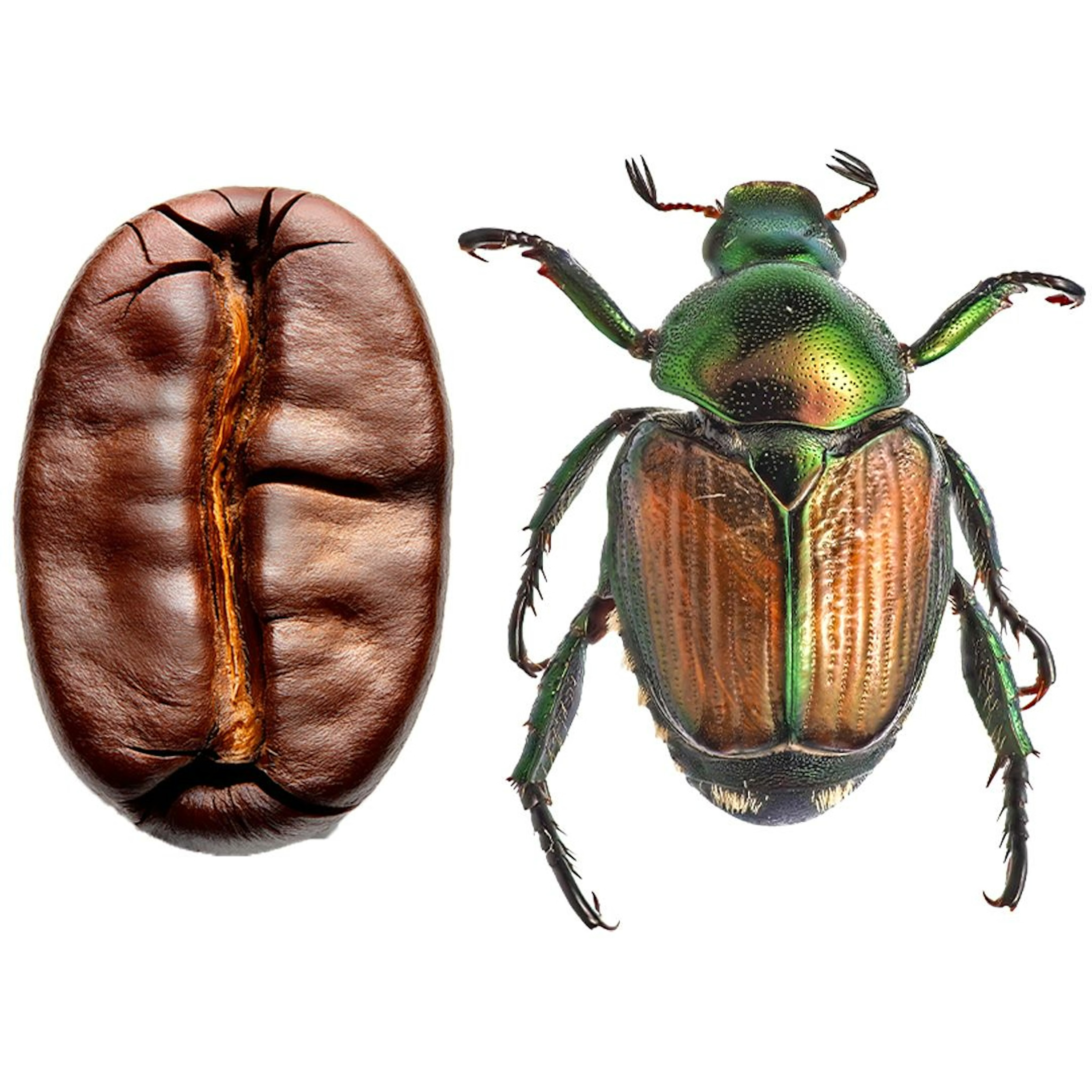
The insect’s most distinctive feature is the row of white hair tufts along its abdomen: five small tufts appear on each side, with two larger tufts at the rear.
Adult beetles are typically active during the summer months, from June to September.
More on this:
FOAG campaign (in English)
For more stories like this on Switzerland follow us on Facebook and Twitter.


